
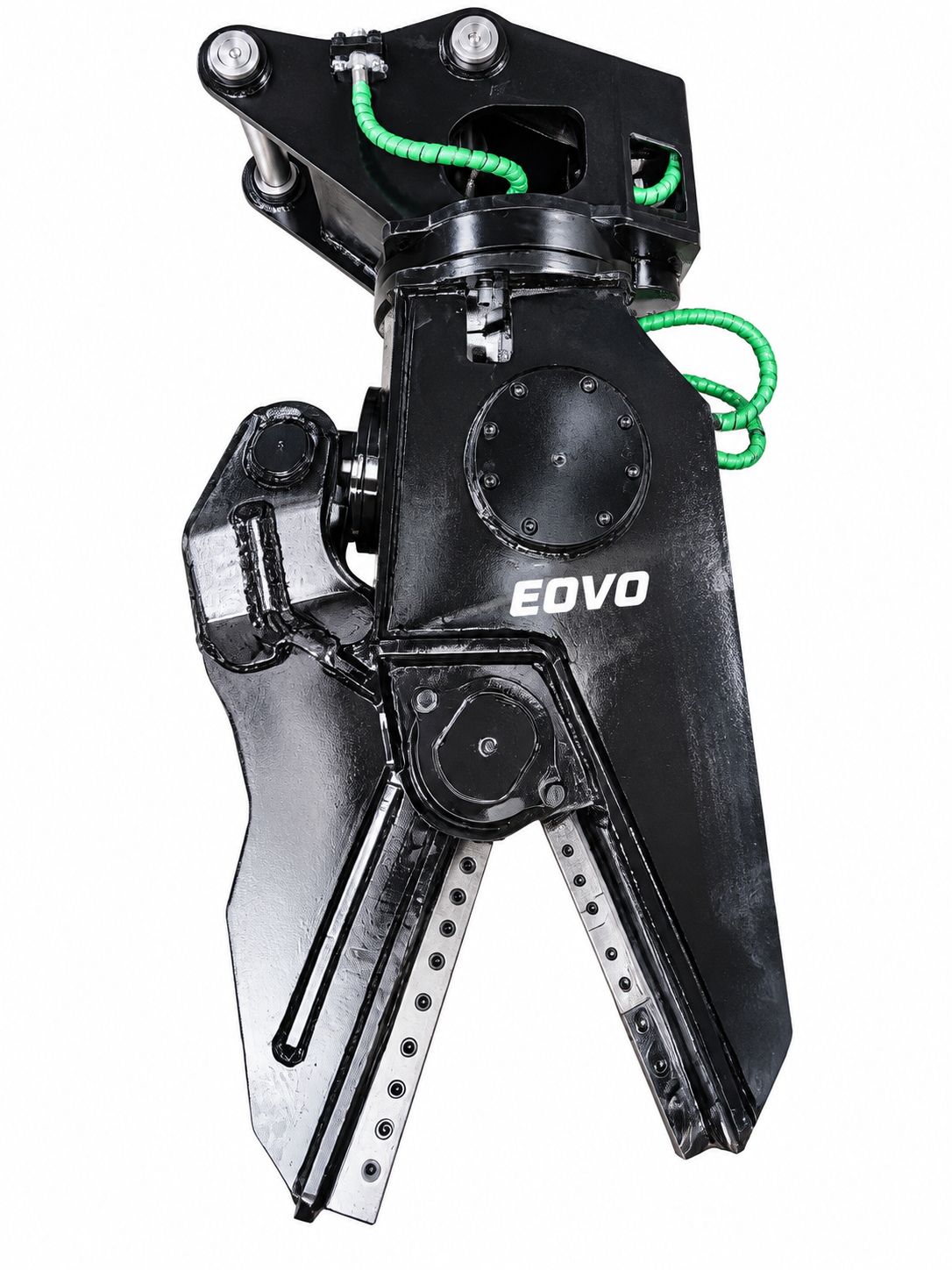
Hydraulic Shear
Hydraulic Shear for Excavator
EOVO excavator hydraulic shears cut steel and metal scrap for demolition, scrap processing and recycling. Also known as excavator steel shears or scrap shears, these attachments use hydraulic cylinder force to cut suitable steel sections, pipes and plates within the selected model’s rated capacity.An excavator-mounted hydraulic shear allows operators to cut bulky metal into manageable pieces directly on site, making material easier to sort, load and transport.
Hydraulic Shear for CAT, Komatsu, XCMG, LiuGong and Other Excavators
EOVO excavator hydraulic shears can be configured for CAT, Komatsu, XCMG, LiuGong, Hitachi, SANY, Volvo, Hyundai, Doosan, JCB, Kobelco, Kubota and other excavators, subject to model and mounting compatibility.
Before ordering, confirm the excavator model, operating weight, hydraulic flow, operating pressure and intended mounting position. The shear’s weight and bracket dimensions must suit the machine. Rotating hydraulic shears also require compatible hydraulic controls for rotation.
EOVO supplies aftermarket excavator attachments. Brand names are used only for compatibility reference; EOVO is not affiliated with these manufacturers.
Hydraulic Shear Features & Performance
-Hydraulic Steel Cutting: Uses hydraulic cylinder force to cut suitable steel sections, pipes and plates within the selected model’s rated capacity.
-On-Site Scrap Processing: An excavator hydraulic shear reduces bulky metal into manageable pieces for sorting, loading and transport.
-Controlled Jaw Positioning: The excavator boom positions the shear around accessible material, helping operators approach each cut.
-Rotation on Equipped Models: A rotating hydraulic shear allows jaw alignment at different angles, reducing the need to reposition the excavator.
-Material Preparation for Recycling: Cut metal into sizes suited to downstream handling and recycling requirements, reducing additional processing where possible.
-Performance Matched to the Cut: Steel grade, thickness, shape and cutting position affect capacity. Correct blade clearance and maintenance help maintain cutting performance; jaw opening alone does not determine what the shear can cut.
Hydraulic Shear Size Guide
Choose an excavator hydraulic shear according to machine weight, mounting position, hydraulic capacity and the steel being cut. The following tonnage groups provide a general starting point; suitable model availability must be confirmed.
1–3 Ton Excavators: Specialist lightweight shears, where compatible models are available, for light metal cutting. Attachment weight and limited hydraulic capacity require careful assessment.
4–8 Ton Excavators: Compact hydraulic shears for light scrap processing and cutting smaller steel sections within the model’s rated capacity.
9–15 Ton Excavators: Medium steel shears for general scrap preparation, pipes and lighter demolition materials, subject to the specified cutting limits.
16–25 Ton Excavators: Larger hydraulic shears for regular scrap recycling and steel cutting. Confirm capacity against the steel grade, thickness and section shape.
26–35 Ton Excavators: Heavy-duty scrap shears for demanding metal processing and approved demolition applications. Mounting position significantly affects carrier requirements.
Over 35 Ton Excavators: Assess large shear systems individually for heavy scrap processing and specialist demolition, considering attachment weight, reach and hydraulic demand.Excavator tonnage alone does not confirm suitability. The same shear may require different carrier sizes when mounted in place of the bucket or in place of the excavator stick. Check the approved mounting arrangement, hydraulic flow, operating pressure, attachment weight and mounting dimensions.
Send EOVO your excavator model, intended mounting position and steel dimensions for a recommendation and quotation.
Hydraulic Shear FAQ
Hydraulic Shear FAQ
A hydraulic steel shear cuts metal into manageable pieces for scrap recycling, demolition and transport. Suitable materials may include steel plates, pipes and structural sections within the model’s rated cutting capacity.
What size hydraulic shear do I need for my excavator?
Check excavator weight, hydraulic flow, operating pressure and intended mounting position. Match the shear’s weight and cutting capacity to your machine and the steel you regularly process.
How thick can a hydraulic shear cut?
Cutting capacity depends on steel grade, thickness, section shape and cutting position within the jaws. Check the model’s cutting chart for your material. Jaw opening alone does not indicate maximum cutting thickness.
What is the difference between a hydraulic shear and a concrete pulverizer?
A hydraulic steel shear is designed mainly for cutting metal. A concrete pulverizer crushes concrete and separates reinforcing steel; some include rebar-cutting blades. Choose according to the main material being processed.
Should I choose a rotating or fixed hydraulic shear?
A rotating shear helps align the jaws with material at different angles. A fixed shear offers a simpler arrangement where frequent changes in cutting angle are unnecessary. Rotation requires compatible hydraulic controls.
What hydraulics does an excavator steel shear need?
A cylinder-operated shear requires hydraulic control for jaw opening and closing, with flow and pressure matched to the model. Powered rotation has separate hydraulic requirements. Confirm return-line limits and any case-drain requirement before installation.
Why is my hydraulic shear not cutting properly?
Possible causes include worn blades, incorrect blade clearance, insufficient hydraulic pressure or material beyond the rated capacity. Stop work and check the attachment’s maintenance instructions before further cutting.
How much does an excavator hydraulic shear cost?
Price depends on shear size, cutting capacity, rotation system and mounting arrangement. Send EOVO your excavator model, mounting position and steel dimensions for a recommendation and quotation.