
Rotary
Screening Bucket
Rotary Screening Bucket for Excavator
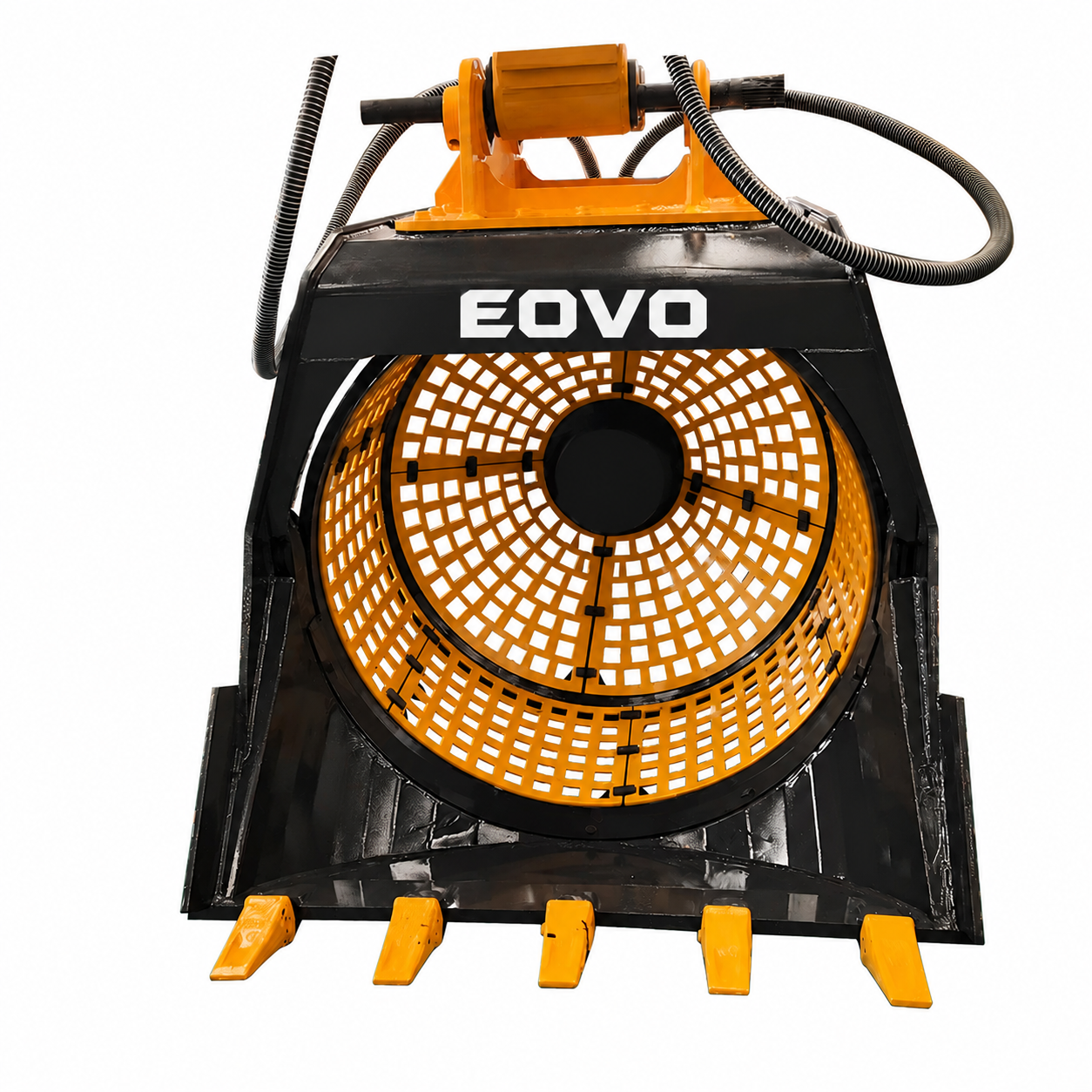
EOVO rotary screening buckets use a hydraulically driven rotating drum to separate finer material from larger stones and debris. Also known as excavator screening drums or rotary sieve buckets, they are used for soil screening, aggregate separation, landscaping and construction material recovery.
The rotating drum tumbles material across the screen, allowing smaller particles to pass through while retaining larger pieces for separate discharge. Screening directly on site helps recover usable fill and reduce unnecessary hauling and disposal.
Rotary Screening Bucket for CAT, Komatsu, XCMG, LiuGong and Other Excavators
EOVO rotary screening buckets can be configured for CAT, Komatsu, XCMG, LiuGong, Hitachi, SANY, Volvo, Hyundai, Doosan, JCB, Kobelco, Kubota and other excavators, subject to model and mounting compatibility.
Before ordering, confirm the excavator model, operating weight, auxiliary hydraulic flow and pressure. The mounting bracket must match the machine’s pin diameter, mounting width and pin centre distance, or its quick coupler specifications. Drum capacity and screen opening size should suit the material and required separation.
EOVO supplies aftermarket excavator attachments. Brand names are used only for compatibility reference; EOVO is not affiliated with these manufacturers.
Rotary Screening Bucket Features & Performance
-Hydraulic Drum Rotation: The rotating drum tumbles material across the screen, allowing finer particles to pass through while retaining larger stones and debris.
-Continuous Material Movement: Drum rotation exposes different parts of the load to the screening surface, reducing the need for repeated bucket shaking.
-On-Site Soil and Aggregate Screening: Process suitable excavated soil, sand and gravel directly at the worksite for landscaping, backfilling and material recovery.
-Separate Discharge of Oversized Material: Larger pieces remain inside the drum until emptied, helping operators keep screened material and oversize piles separate.
-Recover More Usable Fill: Reuse suitable screened material on site to help reduce purchased fill, hauling and disposal costs.
-Screen Openings Matched to Your Application: Select the opening size according to the required separation. Output depends on material moisture, load size and hydraulic settings; sticky clay can reduce screening efficiency.
Rotary Screening Bucket Size Guide
Choose a rotary screening bucket according to excavator weight, hydraulic capacity, material density and required screening size. The following tonnage groups are general selection categories; model availability and compatibility must be confirmed.
1–3 Ton Excavators: Small rotary screening buckets, where compatible models are available, for light soil screening and garden projects. Attachment weight and loaded drum capacity are especially important.
4–8 Ton Excavators: Compact screening buckets for landscaping, residential site preparation and separating stones from loose soil.
9–15 Ton Excavators: Medium rotary screening buckets for regular soil screening, aggregate separation and recovering suitable backfill.
16–25 Ton Excavators: Larger screening buckets for construction sites, earthworks and material recycling. Match drum capacity to material density and machine handling limits.
26–35 Ton Excavators: Heavy-duty rotary screening buckets for larger material recovery projects, subject to suitable hydraulic supply and attachment capacity.
Over 35 Ton Excavators: Assess the attachment individually for high-volume screening, considering drum dimensions, loaded weight and hydraulic requirements.
Excavator tonnage alone does not confirm compatibility. Check attachment weight, loaded capacity, auxiliary hydraulic flow, operating pressure, return requirements and mounting dimensions. Select screen openings to suit the required separation size.
Send EOVO your excavator model, material type and required screening size for a recommendation and quotation.
Rotary Screening Bucket FAQ
How does a rotary screening bucket work?
A hydraulic motor rotates the screening drum, tumbling material across the mesh. Smaller particles pass through the openings, while larger pieces remain inside for separate discharge.
What is the difference between a rotary screening bucket and a skeleton bucket?
A rotary screening bucket uses a hydraulically powered drum to separate material. A skeleton bucket has fixed bars and relies on excavator bucket movement to let finer material fall through.
What size rotary screening bucket do I need for my excavator?
Check excavator operating weight, attachment weight, drum capacity and material density. Confirm that the machine can handle the loaded bucket and supply the required hydraulic flow and pressure.
What screen mesh size should I choose?
Choose the screen opening according to the material size you want to recover. Smaller openings produce a finer screened fraction but may reduce output or block more easily with sticky material.
Can a rotary screening bucket screen wet soil or clay?
Wet material may be screened, depending on its condition and the bucket design. Sticky clay can coat the mesh or remain in clumps, reducing separation efficiency. Confirm suitability for your actual material before ordering.
Can a rotary screening bucket crush rocks or concrete?
A standard rotary screening bucket separates material by size; it is not designed to crush hard rock or concrete. Oversized material normally needs separate crushing before further screening.
Can the screen size be changed?
Some rotary screening buckets use replaceable mesh panels or interchangeable baskets. Confirm the available screen sizes and replacement arrangement for the selected model.
How much does an excavator rotary screening bucket cost?
Price depends on bucket size, drum capacity, hydraulic drive, screen configuration and mounting bracket. Send EOVO your excavator model, material type and required screening size for a recommendation and quotation.